Carte / États-Unis / Ohio / Logement
George Scott House
Ohio · Samuel Hannaford

Texte de Wikipédia en anglais, en attente de traduction.
The George Scott House is a historic residence in Cincinnati, Ohio, United States. Built in the 1880s according to a design by prominent architect Samuel Hannaford, it was originally home to a prosperous businessman, and it has been named a historic site. Scott was one of the executives at George Scott's Sons Pottery, a family-owned business along the Ohio River near downtown. In 1846, the previous George Scott had come to the United States, soon settling in Cincinnati and establishing a highly successful pottery firm. Following his death, the company's name was changed to "George Scott's Sons". The firm was highly prosperous due to its manufacture of potteries ranging from Rockingham-type wares to yellowware, and by the 1870s it had become the country's largest producer of both types. Samuel Hannaford gained a reputation as one of Cincinnati's best architects following his production of Music Hall in the 1870s, and the city's growth provided plenty of demand for the services of such an architect. During the late nineteenth century, he was responsible for designing many fine residences like the Scott House: many prominent businessmen and politicians of the Gilded Age found his designs highly appealing, and the wealthy neighborhoods of Clifton, Walnut Hills, and Avondale were dotted with grand Hannaford houses. It was this architect whom Scott chose to design his own residence in 1887. Scott's house features a mix of materials: the foundation is stone, the walls are brick, the roof is slate, and wooden elements are also prominent. Two and a half stories tall, the house combines generic Victorian styling with Queen Anne influences. Among its prominent components are the large gables formed by the rooflines, Eastlake-style details on the porch, and a turret on one corner. Half-timbering with stucco covers many of the front walls above and around the porch, which itself includes details such as a pediment and frieze, while the turret's exterior comprises numerous lintels and lugsills, and its roof is an eight-sided pyramid. In 1980, the George Scott House was listed on the National Register of Historic Places, qualifying because of its architecture; it was deemed a fine example of the changing architectural tastes of the late 19th century, which Hannaford frequently embraced by designing numerous buildings in varying architectural styles. Scott's house was part of a group of dozens of Hannaford-designed buildings in Hamilton County added to the Register together as part of a multiple property submission.
Discussion
0 messageConnectez-vous ou créez un compte pour commenter, proposer une correction et suivre les ouvrages qui vous intéressent.
Documenter cette fiche
Proposer une correction
Une date fausse, un architecte manquant, une localisation approximative. Chaque proposition est relue par un modérateur avant d'être appliquée.
Se connecter pour contribuerCatégories
Du même architecte
 Wikipédia
Charles Wiedemann House
Newport, États-Unis · 1895
Samuel Hannaford
 Wikipédia
St. Benedict Church
Covington, États-Unis · 1907
Samuel Hannaford
 Wikipédia
Alms and Doepke Dry Goods Company
Cincinnati, États-Unis · 1878
Samuel Hannaford
 Wikipédia
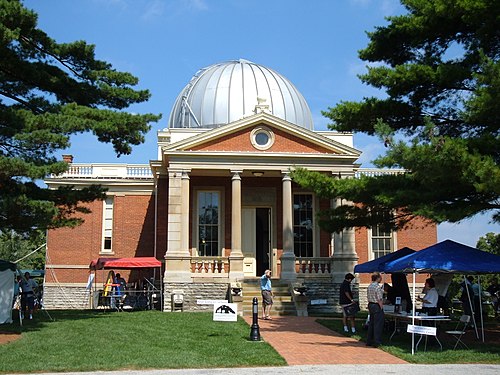
Observatoire de Cincinnati
Cincinnati, États-Unis
Samuel Hannaford
À proximité
Tout Ohio Wikipédia
Elmwood Hall
Ludlow, États-Unis
Benjamin Henry Latrobe
 Wikipédia
Cincinnati Museum Center at Union Terminal
Cincinnati, États-Unis · 1933
Alfred T. Fellheimer
 Wikipédia
Our Lady of Mercy High School
Ohio, États-Unis
Samuel Hannaford
 Wikipédia
Ohio National Guard Armory
Ohio, États-Unis
Samuel Hannaford
Aucun message pour l'instant. Ouvrez la discussion.